When planning a trip—as has become our habit in recent years as the kids grow up—we always look for “support” destinations so we don’t stay too single-minded with the theme of archaeology! But when you realize you are just two hours away from a park like Puy du Fou, you know you’ve hit the jackpot.
Indeed, anyone who, like us, has spent over twenty years visiting megalithic sites, archaeological digs, and museums across Europe knows how difficult it is to make ancient stones “speak” and to bring back the daily life, gestures, and atmosphere of past centuries. Not to mention the challenge of introducing an archaeological site to a child. Kids in particular often find themselves having to imagine what the places we visit used to look like, and we almost always have to rely on plexiglass scale models or rigid educational panels.Then you arrive in Vendée, in the heart of France, and encounter a completely different concept: Puy du Fou.
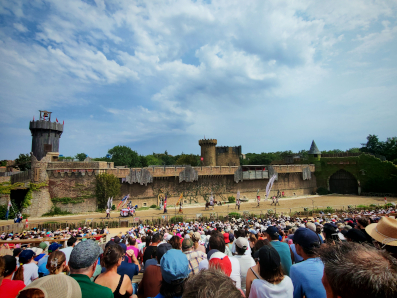
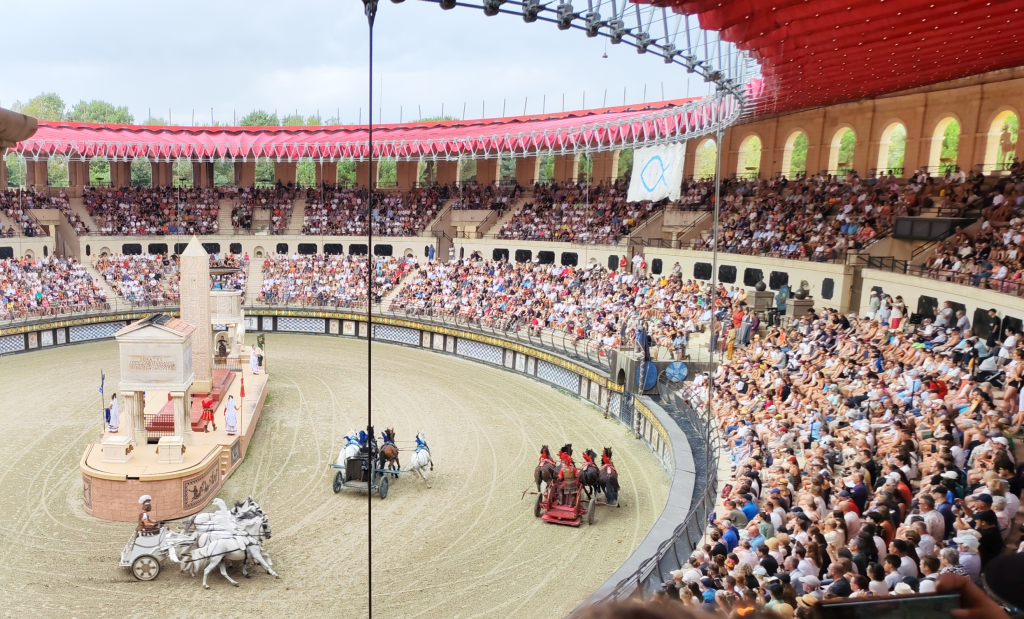
Calling it a “theme park” would be an understatement. For those who love archaeology and the great eras of the past, Puy du Fou is a true immersive time machine where historical reenactment reaches simply astounding technical and theatrical heights. Before getting into the details, let’s clarify the spirit of the park: across a vast area set in the countryside, there are around 20 stage sets where the same 30-minute show is performed three to five times a day. These shows use real actors (often stunt performers), sweeping musical scores, and incredible stage designs to recreate historical or mythological moments, resulting in an impressive theatrical production. Imagine being inside a real castle or a genuine Roman amphitheater, when suddenly up to fifty actors and various animals begin to tell a story…
Costumes, Details, and Sets: Every History Buff’s Dream
As history enthusiasts and explorers of ancient remains, what immediately strikes you at Puy du Fou is not just the sheer scale of the productions, but the almost obsessive attention to visual detail. Let’s start with the accuracy of the costumes: from the chainmail of the Roman soldiers and gladiators in the Signe du Triomphe arena to the detailed tunics of the Vikings landing from their drakkars, all the way to the horse armor and knightly gear of the Hundred Years’ War (Le Secret de la Lance). The fabrics, leathers, helmets, and accessories never look “plastic”; instead, they convey the weight, texture, and tangible reality of period attire.
The sets are built life-size! Walking through the historical villages recreated inside the park—from the Year 1000 village to the medieval hamlet and the 19th-century town—allows you to observe ancient building techniques, artisan workshops, and atmospheres of times gone by with a level of visual continuity that is exceedingly rare. During the shows, whether showcasing naval maneuvers or hand-to-hand sword duels, the choreography is never a mere excuse for entertainment; it draws heavily from European historical memory and iconography.
A Journey Through the Eras
The true power of this venue lies in its ability to span a vast timeline, allowing you to leap from one era to another in just a few hours. Roman Antiquity is brought to life in a spectacular arena featuring chariot races and gladiatorial combats with a raw visual intensity reminiscent of great cinematic epics. Moving on to the Middle Ages, we find the dramatic attack of Vikings whose longships (drakkar) literally emerge from the water, alongside major medieval battles filled with siege engines and epic cavalry charges. Arriving at the Modern Era and the Great Wars, you can move among 17th-century musketeers before entering the poignant, immersive walkthrough experience inside the World War I trenches in Les Amoureux de Verdun.
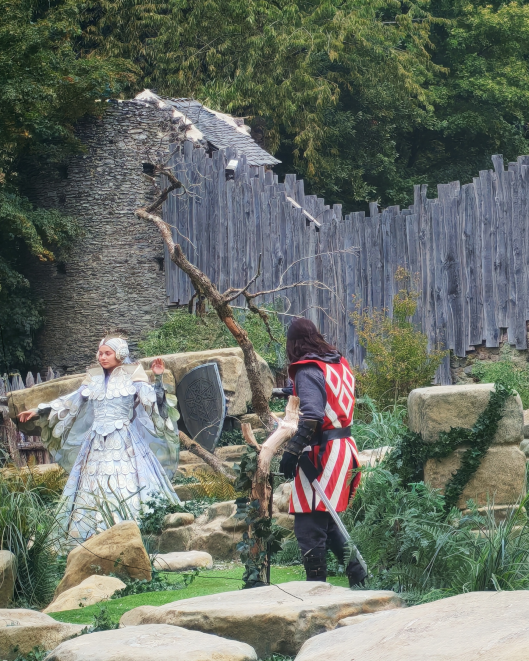
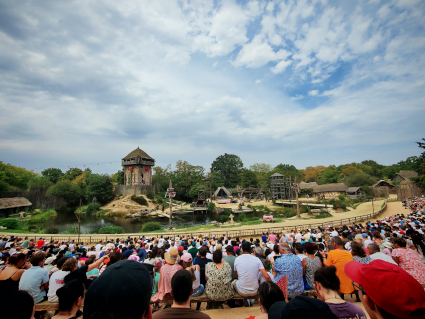
Obviously, as travelers and science communicators, we know very well the difference between the academic rigor of a stratigraphical excavation or the solemnity of a thousand-year-old menhir and the theatrical illusion of a stage show. But that is precisely the point: high-level reenactment does not replace archaeology—it feeds it. It provides that breath of life and color that is so often missing from textbooks, helping us visually picture how the past was alive, dynamic, and made of real people. For those who love traveling in the footsteps of ancient history and want to treat themselves to an experience of pure visual wonder, Puy du Fou is a stop that will genuinely surprise you. One piece of advice: plan for at least a two-day ticket so you have enough time to see all the shows or even rewatch a favorite, such as the incredible falconry display that brings Le Bal des Oiseaux Fantômes to life.